Madison Park occupies a position in Charlotte’s market that is genuinely difficult to replicate. It sits close enough to South End and SouthPark to benefit from both corridors, and the Woodlawn LYNX Blue Line station puts Uptown roughly 15 minutes away without a car. For buyers who commute to Uptown or work along the South End stretch, that transit access is not an amenity, it is a structural advantage built into the neighborhood’s location. Most of what buyers are paying for here is that combination: original mid-century character, proximity to two of Charlotte’s most active commercial corridors, and a rail connection that makes the daily commute optional by car.
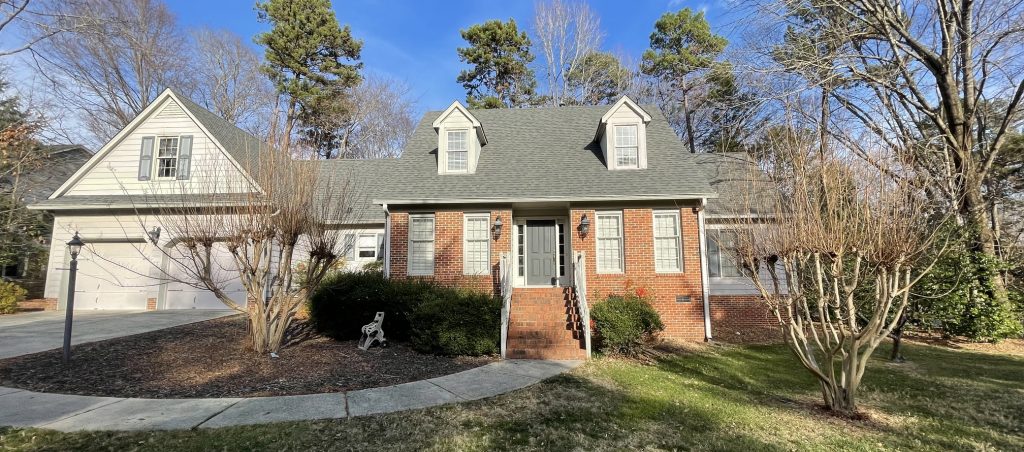
The housing stock reflects the neighborhood’s 1950s origins. Brick ranches are the dominant form, with cape cods, split levels, and fully renovated mid-century modern homes spread throughout. The renovations that have happened here over the past decade have generally respected the architecture rather than overriding it, which keeps the streetscape coherent. That said, buyers filtering primarily on square footage should calibrate expectations before touring. Lot sizes are modest, finished basements are uncommon, and the floor plans do not always match what buyers find in newer construction farther south. The trade-off is real, and buyers who understand it early make better decisions.
What Buyers Get at Different Price Points
The current median sale price in Madison Park sits at $608,660, up 3.9 percent year over year. That figure reflects a fairly wide range of finished conditions, and where a specific home lands within that range depends heavily on how much renovation work has been done and how well it was executed.
At the lower end of the neighborhood’s range, buyers are typically looking at original or lightly updated ranches. These homes often have their original kitchens and bathrooms, functional layouts, and sound bones. They represent a genuine renovation opportunity for buyers with the patience and budget to take one on. The buyers who do best here approach them with realistic contractor estimates in hand before making an offer, not after. Framing the purchase as a project from the start avoids the disappointment that comes from underestimating what a full update actually costs in this market.
In the mid-range, buyers find homes that have been partially updated, with renovated kitchens or bathrooms but original finishes elsewhere. These are often the most negotiation-sensitive, because they sit between two clear value stories. A buyer evaluating a partially renovated home should assess what remains to be done with the same discipline they would apply to a full project home.
At the upper end, fully renovated mid-century homes with open layouts, updated systems, and period-appropriate finishes command meaningful premiums. These homes move. Buyers competing for them should not expect extended negotiation windows. The market data reflects that: the current sale-to-list ratio is 101.3 percent, meaning well-positioned homes are routinely selling above asking price. Buyers who arrive at the offer stage without financing fully in order tend to lose these homes to buyers who have done the preparation work.
Buyers comparing Madison Park to nearby options will often find themselves weighing it against Dilworth, which offers a similar urban walkability profile at a higher price point, or against Beverly Woods to the south, which trades transit access for larger lots and a quieter residential pace. Each makes sense for a different buyer profile.
How Competitive the Market Is and What Preparation Looks Like
With 3.25 months of supply and a median of 24 days on market, Madison Park is a measured market, not a chaotic one. It is not the kind of environment where buyers feel they must abandon all due diligence to compete. But it is also not a buyer’s market. Homes priced accurately for their condition move in roughly three weeks, and the ones that are genuinely well-finished and within walking range of Woodlawn can attract multiple offers.
In Madison Park, the light rail premium is real, but it only holds at full value when the home is genuinely within walking distance of Woodlawn Station. Buyers should verify that distance on a map before any other analysis, because it affects what a home is actually worth to its eventual buyer pool.
Preparation for a competitive offer here has a few consistent elements. Financing should be fully underwritten, not just pre-qualified. A letter from a lender confirming that everything except the specific property address has been reviewed carries weight with sellers in a way that a basic pre-qualification does not. Buyers should also be clear about their renovation tolerance before they tour, because Madison Park’s inventory spans a wide range of finished conditions and the decision framework changes depending on which category a home falls into.
Understanding the as-is versus repair-first question matters on the buyer side as much as the seller side. Buyers who identify a well-located but unrenovated home should approach the as-is or repair analysis from their own angle, asking what the finished value of the renovated home would be relative to the purchase price plus renovation cost. If that math works, the original ranch that others overlook can be the strongest buy in the neighborhood.
Tim works with buyers in Madison Park who are approaching the decision analytically. That means understanding what the LYNX access is actually worth to a specific buyer’s life, what the renovation math looks like on a given property, and how a home here compares to alternatives in the surrounding corridors. The goal is a decision made with full information, not one made under pressure.
See the full Madison Park neighborhood guide for a deeper look at the housing stock, lifestyle profile, and what buyers at different price points should expect when evaluating this neighborhood.