Relocating to Charlotte
Relocating to Charlotte,
done right.
Local insight, remote-buyer strategy, and one advisor who knows every neighborhood you’re considering.
How This Works
A structured process built for buyers
who aren’t local yet
Relocation Strategy Call
We start with a conversation about your situation: where you’re coming from, your timeline, your priorities, your family’s needs, and your budget. I ask questions most agents don’t think to ask because I’ve seen what gets overlooked in relocation purchases.
Neighborhood Matching
Based on your priorities, I put together a focused view of two or three areas worth your time. Not a list of everything available. A curated shortlist with honest tradeoffs so you know what you’re choosing between before you book flights.
Targeted Tour Day
When you visit Charlotte, we make your time count. Structured tours of the right neighborhoods, the right price points, and the right homes for what you’ve told me matters. No wasted drives. No filler properties.
Remote Offer Strategy
Many relocation clients make offers remotely or on a second short visit. I’m set up for that. Virtual walkthroughs, detailed condition assessments, and a clear offer strategy based on what the specific market in that neighborhood is doing right now.
Due Diligence and Closing
North Carolina’s due diligence process gives buyers a real inspection window. I coordinate that for you, connect you with trusted local inspectors and contractors, and make sure nothing surprises you at closing or after you move in.
Your Situation
Every relocation is different. Tell me about yours.
Most relocation clients fit one of these. If yours is a combination, that’s fine too.
I have a timeline I didn’t choose
Tight relocation window, employer assistance involved, and you need someone who can move at that pace without cutting corners.
I’m buying before I’ve fully landed
You may be making an offer on a second visit or remotely. You need someone who can give you the detail that makes that decision feel solid.
Schools are driving the decision
The neighborhood you choose matters, but so does the specific address. School assignments here don’t always follow the lines people assume.
I know I’m moving. I don’t know where yet.
You’ve done some research but haven’t locked in an area. A focused conversation about your priorities narrows this down faster than browsing listings.
Not sure which fits? That’s a fine place to start.
A 20-minute call is enough to build a clear picture.
Charlotte Intelligence
What the Charlotte market requires that your last market may not have
Due Diligence is different here
North Carolina uses a due diligence fee paid directly to the seller at contract. It’s non-refundable if you walk away. Understanding how to structure this correctly protects you and strengthens your offer at the same time.
School assignment depends on address, not neighborhood name
The school districts people talk about when describing a neighborhood aren’t always what feeds from the specific street you’re on. I verify school assignments at the address level before you make an offer, not after.
HOA varies dramatically by community
Some South Charlotte communities have HOA fees that rival a car payment. Others are minimal. This affects monthly cost and resale appetite. Worth knowing before you fall in love with a floor plan.
The market moves faster than most cities
Charlotte’s growth has sustained buyer demand at all price points. In desirable neighborhoods, well-priced homes attract multiple offers quickly. Waiting to “see what else comes up” is often the wrong strategy here.
Property taxes vary by county
Mecklenburg County, Union County, and York County (SC) all have different tax rates. For the same home value, your annual tax bill can differ by thousands of dollars depending on which side of a county line you’re on.
Not all new construction is equal
Charlotte has significant new construction across price points. Builder quality, warranty terms, lot premiums, and incentive windows vary enough to matter. I work with buyers in new construction communities regularly and know what to watch for.
Relocating From
Moving to Charlotte from another city?
City-by-city guides on what your move means for budget, taxes, and timeline, and which Charlotte neighborhood tends to fit.

Your Advisor
Tim Petrinec
REALTOR® | Berkshire Hathaway HomeServices Carolinas Realty
I moved to Charlotte in 2007 planning to stay a short while. That was eighteen years ago. I know this city from the inside, not the overview.
Over 200 transactions in Greater Charlotte. A background in investment properties and renovations that gives me a read on value that goes beyond the listing price. And a direct, one-on-one working style that doesn’t route you through a team when you need an answer.
Relocation clients are a significant part of my practice. I’ve built the process specifically for buyers who need more information faster and can’t afford to waste a trip.
Relocation Guide
Get the Relocation Guide.
A practical guide to Charlotte’s neighborhoods, school districts, commute corridors, and what relocation buyers need to know about North Carolina contracts.
Get the Relocation Guide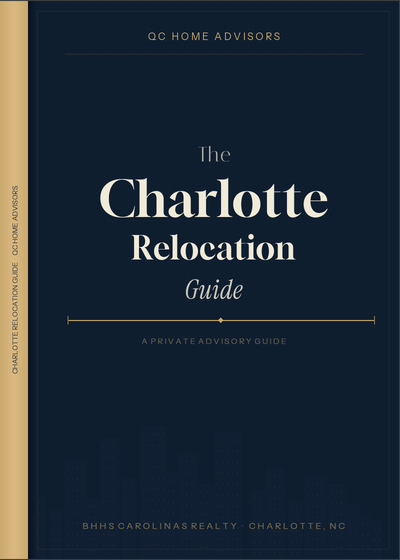
Relocating to Charlotte NC
Charlotte draws a steady stream of buyers from across the country, and for good reason. The combination of a diversified job market, relative affordability compared to coastal metros, and a range of neighborhoods that suit different lifestyles makes it one of the more compelling relocation destinations in the Southeast. Moving to Charlotte from a distance, however, is a different transaction than buying locally, and it rewards a different kind of preparation.
What makes relocation buying different
When you are buying from out of state, you are making high-stakes decisions with less direct exposure to the market. You may have one or two trips to see homes in person. You are evaluating neighborhoods you have never lived in, often without a clear sense of how they compare to each other or to the area you are leaving. And you are typically working under a timeline driven by a job start date, a lease end, or a school year, which compresses the whole process.
The advisory approach is built around that reality. Before you visit, we work through what you actually need: commute tolerance, school priorities, lifestyle fit, price range relative to Charlotte values, and how quickly you need to be in a home. That conversation shapes where we focus your time when you arrive, rather than running you through neighborhoods that do not fit.
How Charlotte is organized
Charlotte is not a city where one area suits everyone. South Charlotte and the towns of Union County offer strong schools, newer construction, and suburban depth. Closer-in neighborhoods like Myers Park, Dilworth, and Cotswold offer walkability, character, and proximity to Uptown. The differences in price, lifestyle, commute, and inventory between these corridors are significant enough that landing in the wrong one is a real risk for buyers who did not have local guidance.
The neighborhood guides on this site exist specifically to address that gap. Each one covers what the neighborhood is actually like, what buyers compete against, school assignments, and current market conditions.
How to get started
If you are early in the process and still mapping out where in Charlotte makes sense, the South Charlotte overview and the moving to Charlotte guide are good starting points. If you are further along and ready to talk through your specific situation, reach out directly.
FAQ
Common questions
What are the main areas of Charlotte to consider when relocating?
Charlotte's residential market divides broadly into several distinct corridors. South Charlotte, covering areas like Ballantyne, Blakeney, and the Providence corridor, skews toward newer construction and family-oriented neighborhoods with strong school assignments. The inner south neighborhoods, including Myers Park, Dilworth, Cotswold, and SouthPark, offer established character, walkability, and shorter commutes to Uptown. North Charlotte, including Huntersville, Cornelius, and Davidson, offers lake access and a different lifestyle feel. Union County to the southeast, including Waxhaw, Weddington, and Indian Trail, attracts buyers who want more land and a lower price per square foot. Each area has a different value proposition, and where you land depends on your priorities.
How does the Charlotte school system work for families relocating from out of state?
Charlotte-Mecklenburg Schools operates a combination of neighborhood-assigned schools and a magnet and choice program. School assignments are address-based, which means the specific street you buy on determines which school your child is zoned for. School quality and ratings vary considerably by neighborhood, and assignment boundaries can shift. For families where schools are a primary driver, verifying the current assignment for a specific address at the CMS website before making any offer is essential. The QC Home Advisors neighborhood pages include current school assignments by area.
What is the cost of living in Charlotte compared to other major metros?
Charlotte is generally more affordable than coastal metros like New York, San Francisco, Washington DC, and Boston, which is one reason it continues to attract relocation buyers. Housing costs are the most significant variable. Median home prices in established south Charlotte neighborhoods run from the mid $400,000s up through $2 million and above depending on the area. North Carolina has no estate tax and relatively moderate income tax rates, which factors into total cost of living for higher earners. Property taxes in Mecklenburg County run approximately 0.6 to 0.8 percent of assessed value depending on the municipality.
How long does it typically take to relocate and buy a home in Charlotte?
From first visit to closing typically runs 60 to 120 days depending on how quickly you identify a home, your financing readiness, and market conditions at your price point. Relocation buyers who are ready to move quickly can compress that timeline, particularly with pre-approval in hand and a clear sense of target neighborhoods before the first visit. Buyers who want to explore multiple areas before committing often benefit from a scouting visit focused on neighborhoods before a dedicated home search trip.
Is it possible to buy a home in Charlotte remotely before relocating?
Yes, and it happens regularly, particularly with corporate relocation buyers. NC's purchase contract allows for remote signing, and video tours, agent-led walk-throughs, and digital documentation make remote purchases manageable. The due diligence period is particularly important for remote buyers because it is your window to arrange in-person inspections and verify the property before you are committed. Having a trusted local advisor who can be your eyes on the ground before and during the due diligence period is the factor that makes remote purchases work well.
Continue exploring
Where to go from here.
Let’s Talk
Tell me about your move
A 20-minute conversation gives me enough context to give you a clear picture. Which neighborhoods fit, which to skip, and what the market is doing in the areas that match your situation.
- Where you’re coming from and your timeline
- Which areas are on your radar and why
- Budget range and must-haves
- What you’ve already learned about Charlotte
Tim Petrinec • Berkshire Hathaway HomeServices Carolinas Realty • 704-771-0815