What Makes Sedgefield Different from Other Infield Charlotte Neighborhoods
Sedgefield sits between Park Road and South Boulevard in a position that few Charlotte neighborhoods can replicate. The LYNX Blue Line runs through it, South Boulevard dining and retail is walkable from most streets, and the Little Sugar Creek Greenway connects directly from within the neighborhood. For buyers who want to reduce car dependence without sacrificing a residential feel, Sedgefield offers a combination of access and lot size that is genuinely uncommon this close to Uptown.
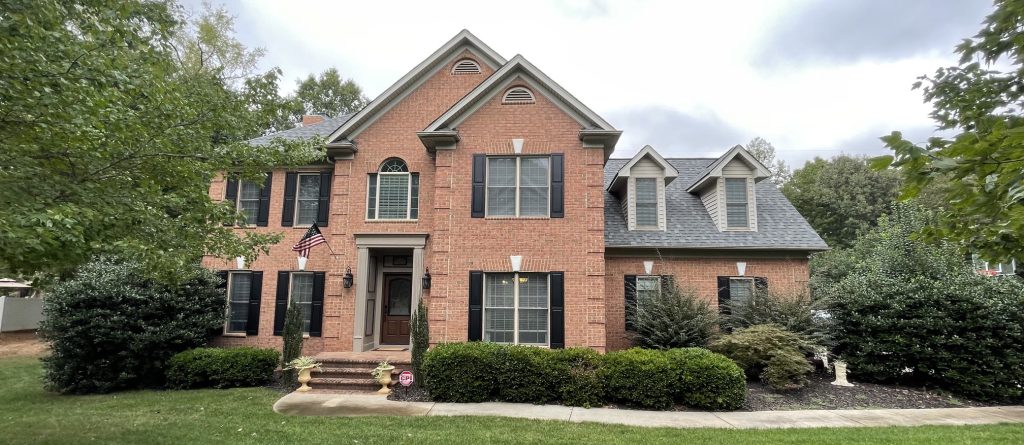
The neighborhood’s housing stock reflects decades of layered investment rather than a single era of development. Original American Small House cottages from the 1940s, some unaltered and some significantly renovated, share streets with full teardown rebuilds ranging from 2,500 to over 4,000 square feet. Duplexes and townhomes line the South Boulevard corridor, and newer condominium developments concentrate near the light rail on the western edge. Lot sizes tend to run larger than in comparable infield neighborhoods, which is precisely why the teardown-rebuild math has worked so consistently for developers here.
This variety is one of Sedgefield’s genuine strengths, but it also creates a neighborhood that changes noticeably by block. Streets with concentrated new construction feel materially different from those where the original housing stock remains largely intact. Some newer developments also trade the tree cover and lot depth of the original streets for density and finish level. Spending time walking specific blocks before focusing a search is not optional here. It is the work.
Buyers who want a reference point for the surrounding area might look at how Dilworth has evolved over a similar trajectory. Sedgefield still trades at a meaningful discount to Dilworth on a per-square-foot basis, and that spread is a meaningful part of what draws buyers who have already evaluated options further north.
What Buyers Get at Different Price Points
The range in Sedgefield is unusually wide. Townhomes and condominiums start in the low $200,000s and extend past $500,000 depending on size, finish level, and proximity to the light rail. Single-family detached homes typically begin in the mid $600,000s, and new construction at the upper end of the market now exceeds $3 million for the largest builds. New single-family inventory generally enters the market above $2 million.
The current median sale price of $1,371,870 reflects the weight of new construction on the overall data, and that figure deserves context. A buyer evaluating an original 1,200 square foot cottage is not competing in the same market as a buyer for a new four-bedroom build, even if both homes appear on the same street. Product type, condition, lot size, and micro-location all drive meaningful price differences, and pulling the wrong comparable is a real risk in a neighborhood with this much variation.
At the lower end of the single-family range, buyers are typically looking at original-stock homes that require some level of work, whether cosmetic or more significant. These homes compete against visually compelling, move-in-ready new construction at higher price points, which affects buyer expectations. A seller who prices an original cottage without accounting for condition relative to nearby new product will generally see that reflected in time on market or in negotiations.
At the upper end, new construction offers modern floor plans, high finish levels, and proximity to the light rail corridor. These homes attract buyers who are purchasing a lifestyle and a location more than they are purchasing a specific architectural character. The buyers drawn to the cottages, by contrast, are often looking for something the new construction does not provide: scale, mature landscaping, and a streetscape that feels settled rather than freshly built.
Sedgefield is a neighborhood in genuine transition, which creates both opportunity and complexity. The gap between a 1940s cottage and the new construction replacing it is wide, in size, in price, and in what each delivers. Understanding which block, which product type, and which price band fits your situation is the real work before making an offer here.
Buyers considering walkable infield neighborhoods in this price range sometimes also evaluate Myers Park, where the housing stock is more uniform but the entry point for detached homes is considerably higher. Sedgefield’s range of product types creates more entry points, though it also requires more careful analysis to compare accurately.
How to Prepare Before Making an Offer in Sedgefield
The market data reflects a neighborhood where well-positioned product moves quickly and without significant concessions. The current median days on market is three, months of supply sits at 2.5, and the sale-to-list ratio of 101 percent indicates that accurately priced homes are regularly receiving offers above asking. Year-over-year prices are up 15.2 percent. This is not a market where a buyer has the luxury of extended deliberation once the right property is identified.
That speed creates specific preparation requirements. A buyer who enters Sedgefield without a clear picture of which product type they are targeting, which streets they have walked and evaluated, and what their financing looks like is likely to lose to buyers who have done that work in advance. Decisions in a three-day median market are made under real pressure, and the preparation that typically happens during the consideration phase needs to happen before the search begins in earnest.
Comparable selection deserves particular attention. A new-construction home at $2 million is not a useful reference point when evaluating a 1,200 square foot original cottage, even if they sit on the same block. The comparable that matters is the one that matches product type, condition, and micro-location. Buyers who rely on neighborhood-level medians without filtering for those variables are working with incomplete information.
For buyers navigating a purchase in Sedgefield alongside an existing home to sell, the sequencing of those two events adds another layer of complexity to an already fast-moving market. Tim works through the specific tradeoffs with clients in that situation as part of the initial planning conversation, and the sell-first-or-buy-first decision is worth examining carefully before committing to either path in a market at this pace.
The Sedgefield neighborhood page covers pricing by product type, block-level observations, and the full picture of what buyers at different price points should expect before beginning a search. See the full Sedgefield neighborhood guide to go deeper on any of those areas.